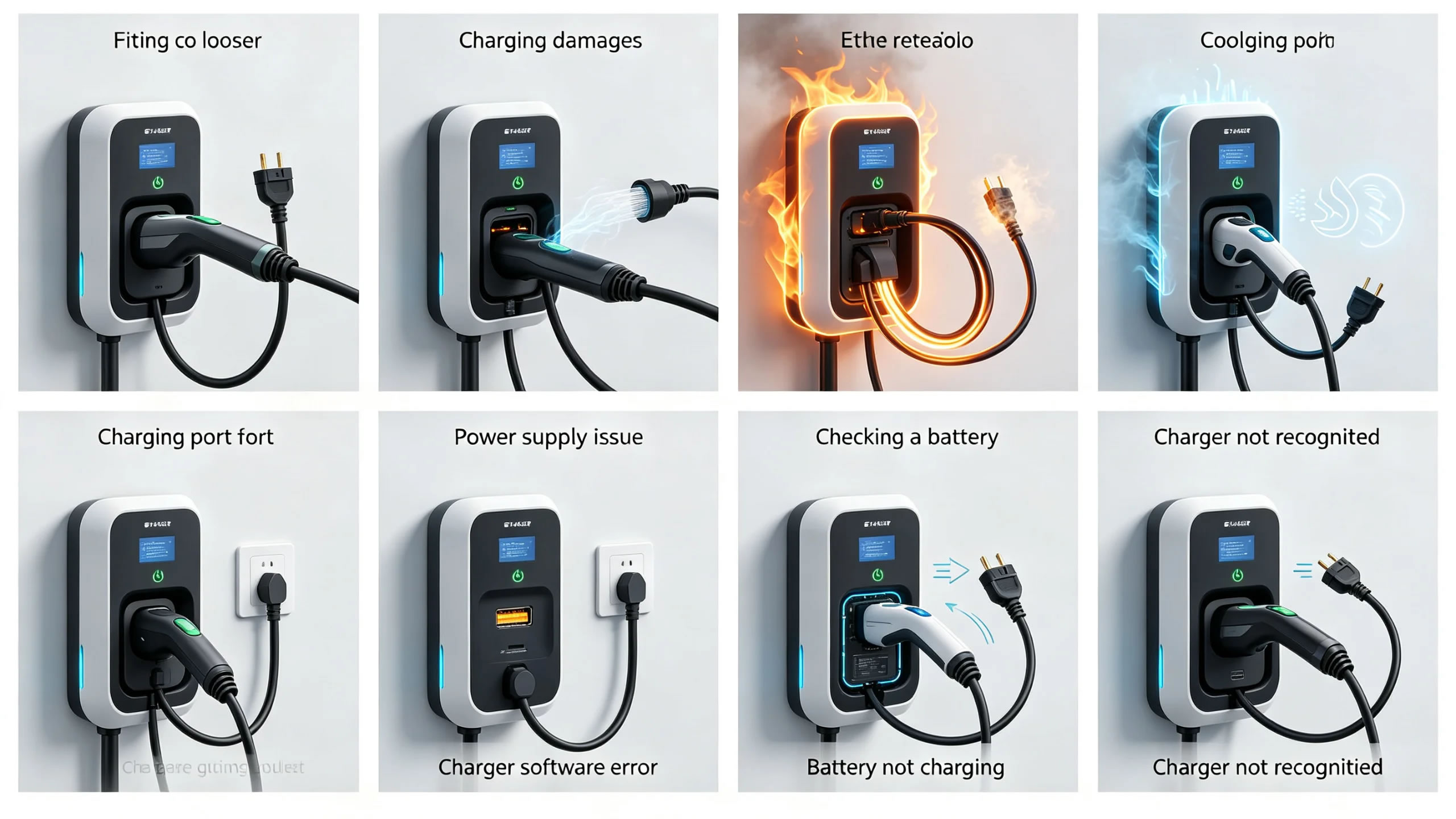
EV charging is usually straightforward, but occasional problems can occur. The vehicle may refuse to start charging, charging may stop unexpectedly, or the charging speed may be lower than expected.
Not every charging problem means the charger is defective. The cause may be related to the vehicle, cable, electrical supply, charging settings, or communication between the charger and the vehicle.
Here are eight common EV charging problems and some basic things to check.
1. The EV Will Not Start Charging
If charging does not begin after connecting the cable, first check the basic connections.
Make sure:
- The connector is fully inserted
- The charger has power
- The vehicle is unlocked or ready to charge
- No charging schedule is active
- The charger does not display an error
Some vehicles also require charging to be enabled through the vehicle's settings or mobile app.
If the charger and vehicle both appear normal but charging still does not start, consult the vehicle or charger manufacturer's troubleshooting instructions.
2. Charging Stops Unexpectedly
Unexpected charging interruptions can have several causes.
Possible reasons include:
- Electrical protection has activated
- The connector has become loose
- The vehicle has reached its charging limit
- The charger has detected an abnormal condition
- A scheduled charging session has ended
- Communication between the charger and vehicle has been interrupted
If the problem happens repeatedly, do not simply restart the charger each time. Check the displayed error information and investigate the underlying cause.
3. Charging Is Slower Than Expected
A charger rated at 7kW, 11kW, or 22kW does not guarantee that the vehicle will always charge at that power.
Actual charging speed can be limited by:
- The vehicle's maximum AC charging capability
- Battery condition
- Battery temperature
- Current battery level
- Electrical supply
- Charger settings
For example, a vehicle that supports a maximum of 11kW AC charging will not charge at 22kW simply because a 22kW charger is connected.
4. The Charger Shows an Error
Modern EV chargers may display error codes, warning lights, or messages through a screen or mobile app.
When an error appears, record the exact message before restarting the equipment.
Then check:
- The charger manual
- The vehicle's charging information
- Cable and connector condition
- Electrical supply
- Manufacturer troubleshooting instructions
Avoid opening the charger housing to investigate internal electrical components unless you are qualified to do so.
5. The Charging Cable Gets Hot
Some warmth during charging can be normal, especially during high-power operation.
However, excessive heat should not be ignored.
Stop charging if you notice:
- Strong heat from the connector
- Burn marks
- Discoloration
- A burning smell
- Damaged cable insulation
Allow the equipment to cool and have it inspected if the problem continues.
6. The Charger Keeps Disconnecting
If charging repeatedly connects and disconnects, check whether the connector is properly inserted and whether the cable is damaged.
Other possible causes include:
- Vehicle charging settings
- Unstable electrical supply
- Communication problems
- Protection functions
- Charger or vehicle faults
Try to determine whether the problem occurs with only one vehicle or at multiple charging stations. This can help identify whether the issue is more likely related to the vehicle or the charging equipment.
7. The Mobile App Cannot Connect
For smart chargers, communication problems may prevent the mobile app from displaying charging information or controlling the charger.
Check:
- Wi-Fi or network connection
- Charger power
- App status
- Account connection
- Bluetooth or network settings, if applicable
If the charger itself continues to operate normally, an app connection problem may not necessarily prevent charging.
8. The Charger Suddenly Stops Working
If the charger has no display, indicator light, or other sign of power, check whether the relevant circuit breaker or electrical protection device has activated.
Do not repeatedly reset a protection device if it immediately trips again.
Repeated tripping may indicate an electrical or equipment problem and should be inspected by a qualified professional.
A Simple Troubleshooting Process
When an EV charging problem occurs, avoid making multiple changes at the same time.
A simple approach is:
1. Check the vehicle.
Look for charging warnings or settings that may prevent charging.
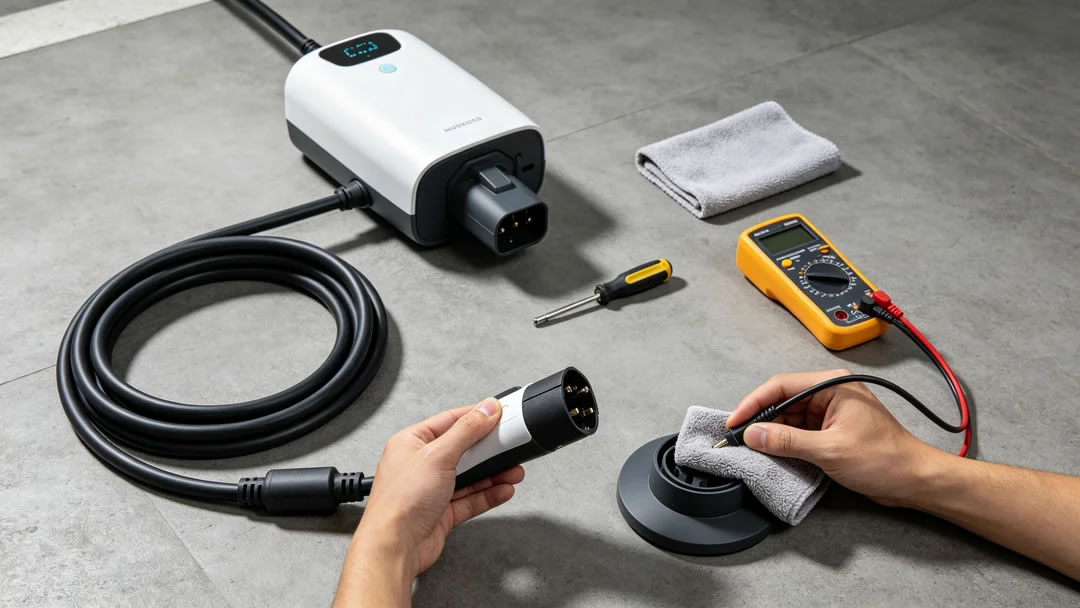
2. Check the cable and connector.
Look for visible damage, dirt, moisture, or loose connections.
3. Check the charger.
Look for warning lights, error codes, or abnormal behavior.
4. Check the electrical supply.
If a circuit breaker has tripped, investigate why rather than repeatedly resetting it.
5. Contact professional support.
If the problem continues or involves electrical components, contact the charger manufacturer, vehicle manufacturer, or qualified electrician.
Quick Troubleshooting Table
| Problem | Possible Cause |
|---|---|
| Won't start charging | Connection, settings, charger or vehicle |
| Charging stops | Protection, settings, communication |
| Slow charging | Vehicle limit, battery condition, electrical supply |
| Error message | Charger or vehicle detected an abnormal condition |
| Excessive heat | Connection, cable, or equipment issue |
| Repeated disconnection | Cable, communication, vehicle or charger |
| App won't connect | Network or software issue |
| Charger has no power | Electrical supply or protection issue |
Many EV charging problems can be traced to simple issues such as connections, settings, charging limits, or network communication.
The key is to identify the symptoms before taking action. Check the vehicle, cable, charger, and electrical supply step by step.
If you notice burning smells, damaged cables, excessive heat, repeated circuit-breaker trips, or other electrical abnormalities, stop using the equipment and seek professional assistance.
A systematic approach can make troubleshooting easier while avoiding unnecessary risks.
 September 23, 2026