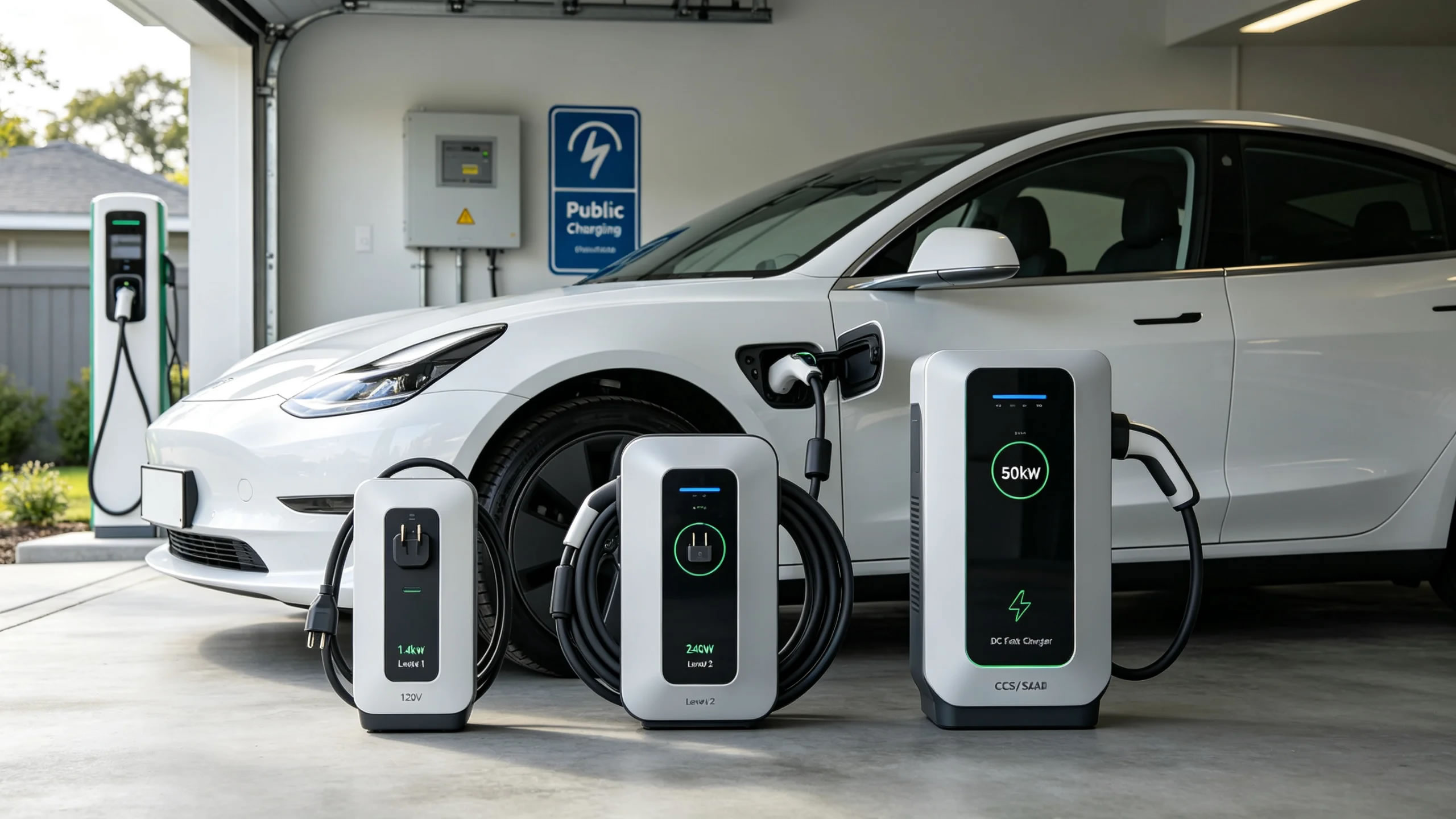
How to Choose the Right EV Charger for Your Car
Choosing an EV charger is not simply about selecting the highest charging power. The right charger needs to match your vehicle, electrical system, parking situation, and daily driving habits.
With many chargers offering different power levels, connectors, and smart features, understanding a few key factors can make the decision much easier.
1. Start With Your Vehicle
The first thing to check is your vehicle's charging capability.
Look at the manufacturer's specifications for:
- Maximum AC charging power
- Maximum DC charging power
- Supported connector type
- Voltage and current requirements
For example, if your vehicle supports a maximum of 11kW AC charging, installing a 22kW AC charger does not automatically make the vehicle charge at 22kW.
The charger and vehicle work together, and the actual charging power is generally limited by the lower capability of the relevant system.
2. Choose the Right Connector
The connector must physically and electrically match your vehicle.
Common connector types include:
- Type 1 — widely used for AC charging in some markets
- Type 2 — widely used in Europe and other markets
- CCS — commonly used for DC fast charging
- CHAdeMO — another DC charging standard used by some vehicles
Always check your vehicle manufacturer's specifications before purchasing a charger.
Connector availability can also vary by country and vehicle model.
3. Consider the Charging Power
Common AC charger power levels include 3.5kW, 7kW, 11kW, and 22kW.
A higher-power charger can potentially add energy faster, but higher power is not always necessary.
Consider:
- How far you drive each day
- How long the vehicle is parked
- Your vehicle's maximum charging power
- Your home's electrical capacity
For example, a driver who parks overnight may find a moderate-power AC charger sufficient for daily use.
A higher-power charger may be more useful for drivers with greater daily mileage or shorter charging windows, provided the vehicle and electrical installation support it.
4. Check Your Electrical Installation
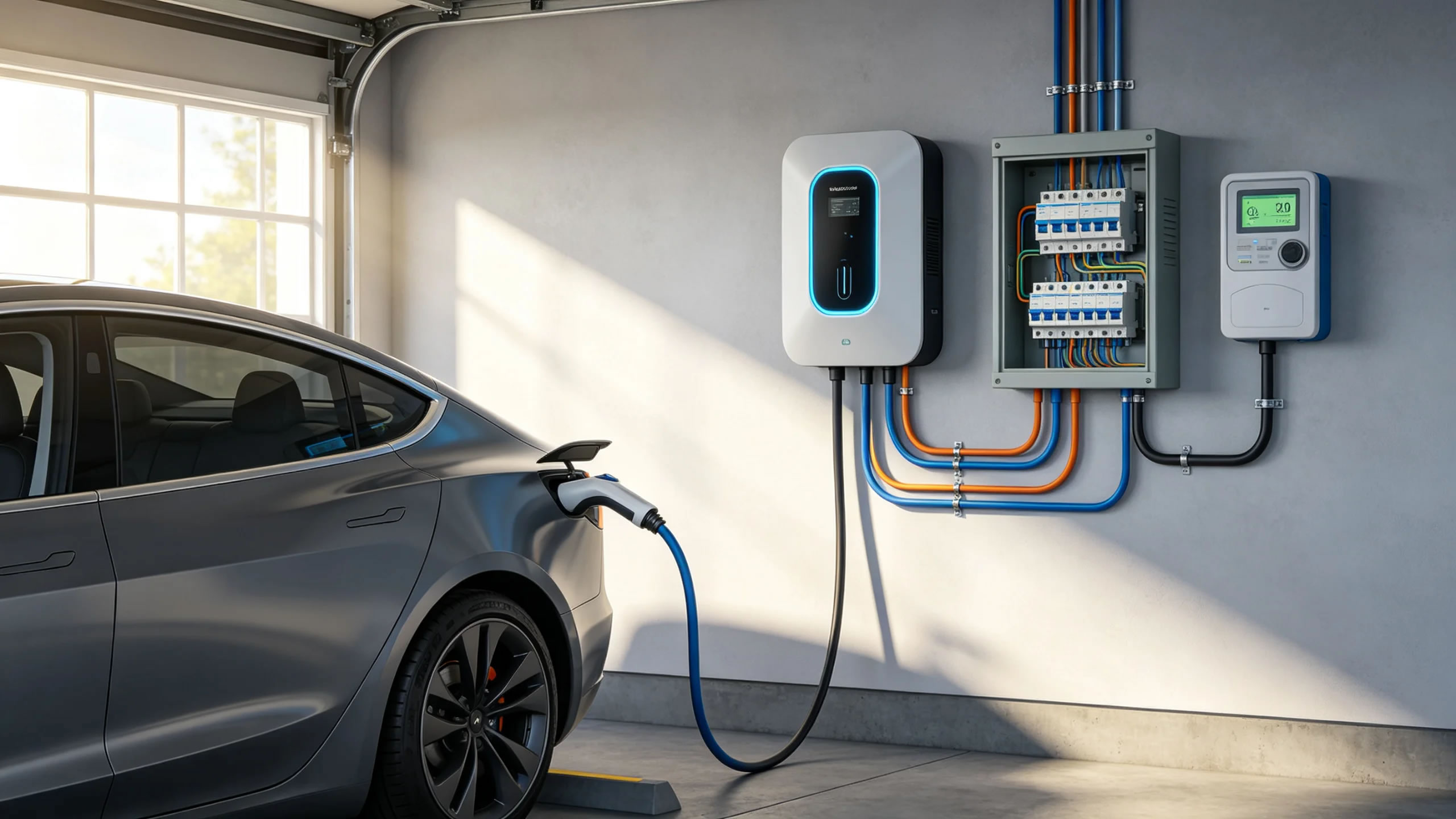
The charger must also be compatible with the electrical system at the installation location.
Important factors include:
- Voltage
- Maximum current
- Single-phase or three-phase supply
- Available electrical capacity
- Wiring
- Circuit protection
A high-power charger may require a larger electrical supply than a standard home circuit can provide.
Before installing a charger, have the electrical system assessed by a qualified professional when necessary.
5. Think About Where You Will Charge
Your charging location matters.
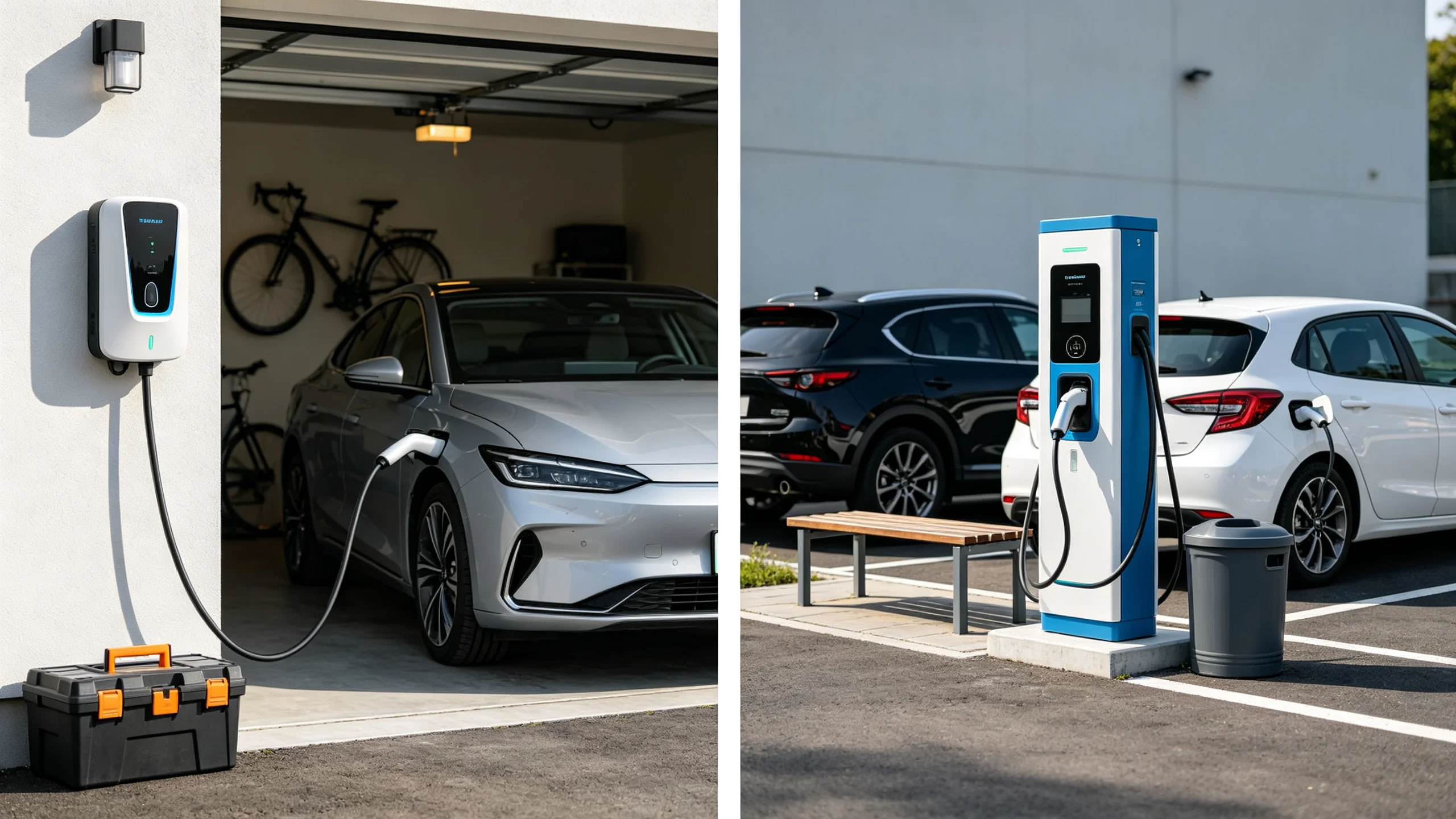
Home
Home charging is convenient for regular overnight charging. A dedicated AC charger is often suitable for drivers who have private parking and appropriate electrical capacity.
Workplace
If your vehicle remains parked for several hours during the day, moderate-power AC charging may be sufficient.
Public Locations
Public charging can include both AC and DC charging. DC fast charging is particularly useful when charging time is limited.
The best charger depends on how and where you normally charge rather than simply choosing the highest available power.
6. Do You Need Smart Features?
Modern EV chargers may include features such as:
- Mobile app control
- Charging schedules
- Energy monitoring
- Remote start and stop
- Wi-Fi or Bluetooth
- Load management
- User access control
These functions can be useful, but they are not essential for every driver.
If you mainly need simple and reliable charging, basic functionality may be enough. If you want to monitor energy use or control charging remotely, a smart charger may provide additional convenience.
7. Consider the Installation Environment
If the charger will be installed outdoors, environmental protection becomes particularly important.
Check the charger's:
- IP rating
- Operating temperature range
- Cable management
- Mounting requirements
- Protection features
The charger should be installed according to the manufacturer's instructions and its specified operating environment.
8. Don't Choose Based on Power Alone
A common mistake is to assume that the charger with the highest kW rating is automatically the best option.
A better approach is to match:
Vehicle capability + electrical system + daily driving + parking time + charging location
For example, a 7kW charger may be perfectly suitable for one driver, while another driver may benefit from 11kW or 22kW charging.
The right choice is the one that provides the required charging capability without creating unnecessary installation requirements or cost.
Quick Checklist
| Factor | What to Check |
|---|---|
| Vehicle | Maximum AC/DC charging capability |
| Connector | Compatible with the vehicle |
| Power | 3.5kW, 7kW, 11kW, 22kW, etc. |
| Electrical system | Voltage, current, phase and capacity |
| Location | Home, workplace or public charging |
| Installation | Indoor/outdoor requirements |
| Features | App, scheduling, monitoring, load management |
| Future needs | Possible changes in vehicle or usage |
Choosing an EV charger becomes much easier when you start with the vehicle rather than the charger itself.
Check the vehicle's charging capability and connector first, then consider the available electrical system, charging location, daily driving habits, and features you actually need.
A higher-power charger can be useful in the right situation, but compatibility and practicality are just as important as charging speed.
Taking the time to compare these factors can help you choose a charger that works well for both your EV and your everyday routine.
 September 26, 2026