https://page.weixin.qq.com/smartpage/p/b1_AcAAUAZDAPICaguLe0dQ6O01lzF?p=1jigjo
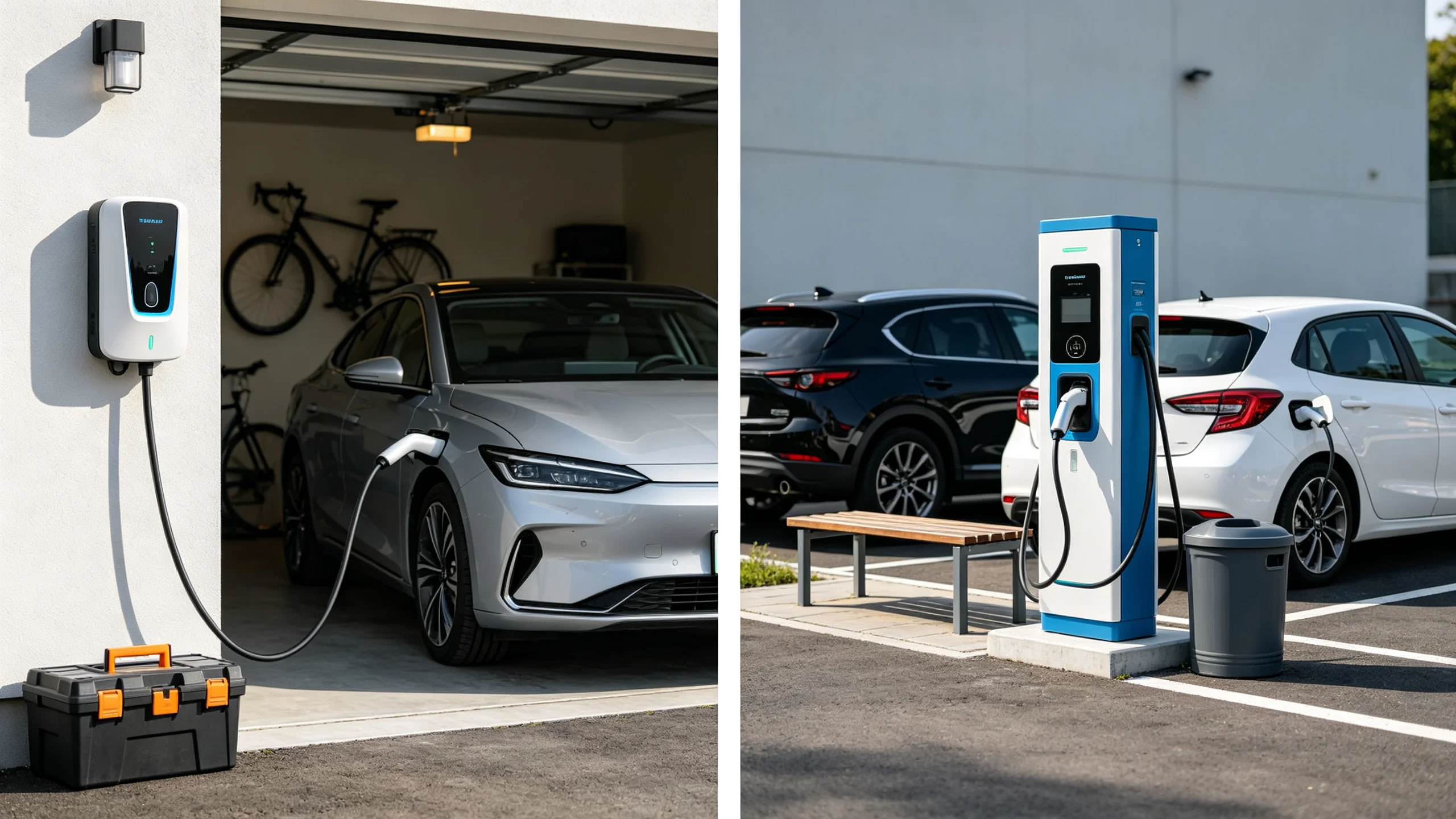
Charging an EV at home adds a significant electrical load to a household. If several appliances are operating at the same time, the total electricity demand can become much higher than usual.
This is where dynamic load management can be useful.
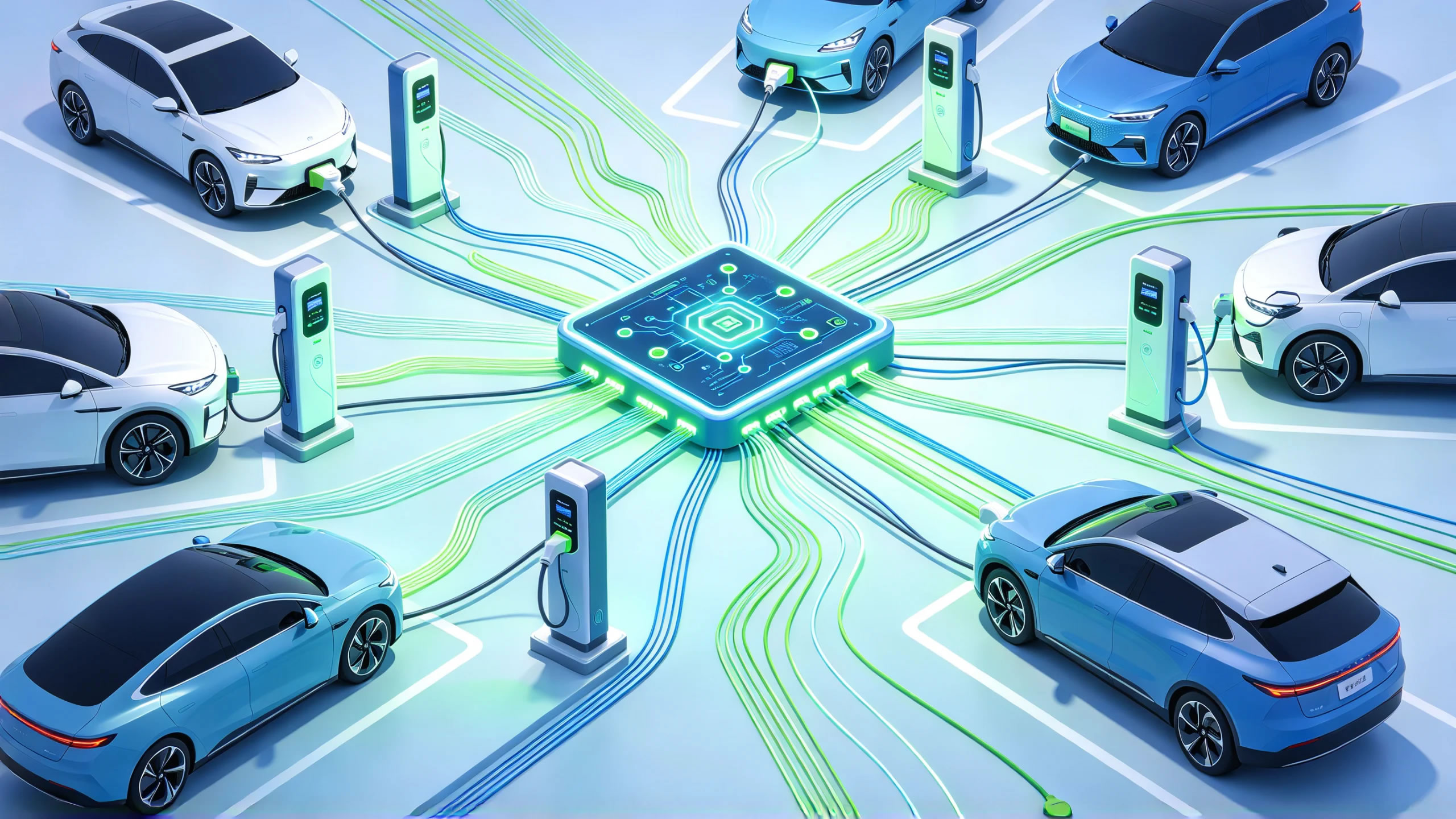
Instead of allowing an EV charger to continuously operate at its maximum power, a dynamic load management system can adjust charging power according to the electricity capacity currently available.
1. What Is Dynamic Load Management?
Dynamic load management, sometimes called dynamic load balancing, is a system that monitors household electricity consumption and adjusts EV charging power accordingly.
For example, imagine a home has a 7kW EV charger.
When other household electricity demand is low, the charger may be able to use close to its available maximum.
If the air conditioner, oven, water heater, and other appliances are turned on at the same time, household electricity demand increases.
The charging system can then reduce the EV charger's power temporarily.
When household demand decreases again, charging power can increase.
The basic idea is:
More household demand → Less EV charging power
Less household demand → More EV charging power
2. Why Is It Useful?
Without load management, an EV charger may operate at a fixed power level whenever the vehicle is charging.
If the home's electrical capacity is limited, running several high-power appliances at the same time may increase the risk of overloading a circuit or triggering electrical protection.
Dynamic load management helps coordinate these loads.
It can be particularly useful for:
- Homes with limited electrical capacity
- Higher-power AC chargers
- Properties with many electrical appliances
- Households with multiple EVs
- Installations where increasing electrical capacity is difficult
3. How Does It Work?
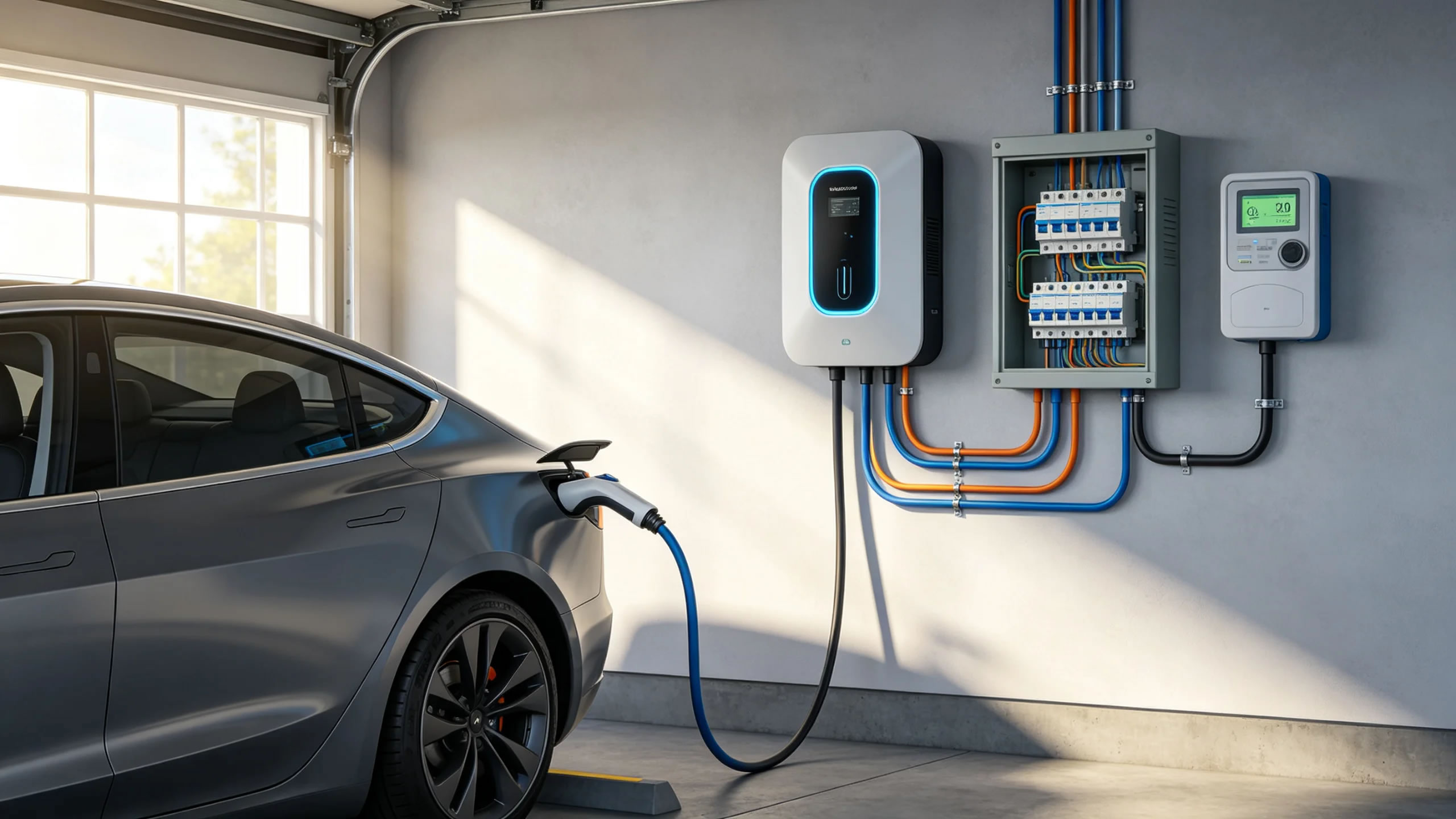
A typical system includes several components.
1. Electrical monitoring
A meter or monitoring device measures the home's current electricity consumption.
2. Charging controller
The system processes the available electrical capacity.
3. EV charger
The charger adjusts its output according to the available capacity.
For example:
Home capacity available: 10kW
Household appliances: 4kW
Potential EV charging capacity: approximately 6kW
If household consumption rises to 7kW, the available charging capacity may fall to around 3kW.
When household consumption later drops to 2kW, more charging capacity can become available.
The exact calculation depends on the electrical installation and control system.
4. Dynamic Load Management vs. Fixed Charging
A traditional charging setup may provide a fixed maximum charging current.
For example, a charger may be configured to provide up to 32A.
Dynamic load management introduces another layer of control.
The charger can automatically adjust the current instead of continuously operating at the maximum level.
This does not necessarily mean the vehicle charges faster.
Instead, it helps the charging system use available electrical capacity more efficiently.
5. Is Dynamic Load Management the Same as Smart Charging?
Not exactly.
The two concepts are related but have different purposes.
Smart charging is a broader concept that can include charging schedules, mobile app control, electricity-price optimization, energy monitoring, and other functions.
Dynamic load management specifically focuses on managing electrical capacity in real time.
A smart EV charger may support dynamic load management, but not every smart charger necessarily provides this function.
6. What Happens to Charging When Power Is Reduced?
Reducing charging power does not normally mean charging stops completely.
Instead, the charger may temporarily operate at a lower current.
For example:
32A → 24A → 16A
As household electricity demand changes, the charging current can be adjusted accordingly.
The vehicle can continue charging while the system manages the available electrical capacity.
This can be particularly useful when an EV is parked for several hours, because there may be enough time to gradually complete the charging session.
7. Is It Suitable for Every Home?
Not necessarily.
For a household with plenty of electrical capacity and relatively low simultaneous electricity demand, basic charging may be sufficient.
Dynamic load management becomes more interesting when electrical capacity is limited or household demand changes significantly throughout the day.
It may also be useful when installing a higher-power charger without immediately upgrading the entire electrical service.
A qualified electrician should assess the installation before deciding whether this type of system is appropriate.
Quick Comparison
| Feature | Standard Charging | Dynamic Load Management |
|---|---|---|
| Charging power | Usually fixed or configured | Adjusts automatically |
| Household load monitoring | Limited or none | Yes |
| Response to high household demand | Limited | Reduces charging power |
| Electrical capacity utilization | Less flexible | More flexible |
| Installation complexity | Generally simpler | May require additional monitoring equipment |
| Best suited for | Simple charging needs | Variable or limited electrical capacity |
Dynamic load management is a practical way to coordinate EV charging with the rest of a home's electrical demand.
Instead of treating the EV charger as an independent load, the system continuously considers how much electricity is being used elsewhere in the home and adjusts charging power accordingly.
For households with limited electrical capacity, multiple appliances, or higher-power EV chargers, this technology can make better use of the existing electrical system.
The goal is not simply to charge as fast as possible, but to use available electrical capacity intelligently while maintaining a reliable charging experience.
 September 30, 2026