One of the most common questions from new EV owners is: How much does it cost to charge an electric vehicle?
Unlike traditional vehicles that are usually measured by fuel volume, EV charging costs are based on electricity consumption.
The final cost depends on several factors, including electricity prices, battery capacity, charging efficiency, charging location, and charging method.
Understanding these factors can help EV owners estimate their charging expenses more accurately.
1. How Is EV Charging Cost Calculated?
EV charging cost is mainly based on the amount of electricity used.
The basic formula is:
Charging Cost = Electricity Used (kWh) × Electricity Price
For example:
If an EV uses 40kWh of energy and electricity costs $0.15 per kWh:
40 × $0.15 = $6
The actual cost will vary depending on local electricity prices and charging conditions.
2. What Does kWh Mean?
A kilowatt-hour (kWh) is the unit used to measure electrical energy.
It represents how much energy is consumed over time.
For EVs:
- Battery capacity is usually measured in kWh
- Charging energy is measured in kWh
- Electricity prices are often calculated per kWh
For example, a vehicle with a 60kWh battery theoretically stores more energy than a vehicle with a 40kWh battery.
However, actual driving range depends on many factors, including vehicle efficiency, driving conditions, temperature, and speed.
3. Home Charging Cost
Home charging is usually based on the household electricity rate.
The cost depends on:
- Local electricity prices
- Time-of-use tariffs
- Charging efficiency
- Vehicle energy consumption
Some electricity providers offer different prices at different times of the day.
In these cases, charging during lower-cost periods may reduce charging expenses.
However, availability of these tariffs varies by region and electricity provider.
4. Public Charging Cost
Public charging stations may use different pricing methods.
Common models include:
Price per kWh
Users pay according to the amount of electricity delivered.
Example:
30kWh × charging price per kWh
Price per Minute
Some charging stations charge based on connection time.
This method may depend on charging power and local regulations.
Session Fees or Additional Charges
Some networks may include:
- Connection fees
- Parking fees
- Idle fees after charging is complete
- Subscription costs
Always check the charging station's pricing information before starting a session.
5. Why Do Charging Costs Differ?
Two EV owners may pay different amounts for the same amount of energy.
Reasons include:
Electricity Price Differences
Electricity prices vary between countries, regions, and providers.
Charging Location
Home charging and public charging may have different pricing structures.
Charging Speed
Fast charging infrastructure usually involves higher equipment and operating costs.
Vehicle Efficiency
Different EV models consume different amounts of energy per kilometer.
A more efficient vehicle may require less energy to travel the same distance.
Charging Losses
Not all electricity delivered from the grid is stored directly in the battery.
Some energy is lost during the charging process due to conversion and heat.
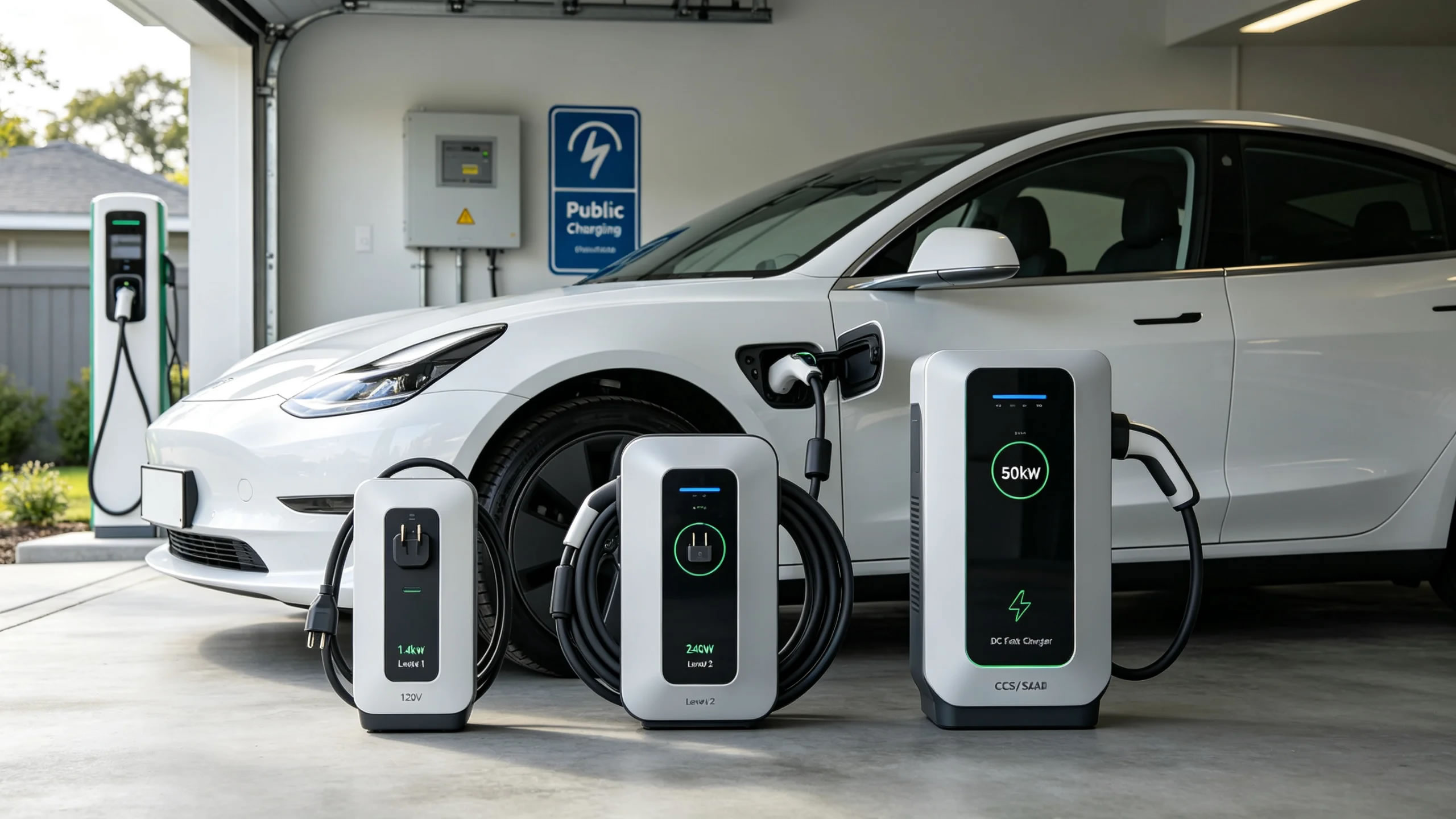
6. AC Charging vs. DC Fast Charging Cost
AC and DC charging serve different purposes.
AC Charging
Commonly used for:
- Home charging
- Workplace charging
- Long parking periods
It usually provides moderate charging speed.
DC Fast Charging
Commonly used for:
- Highway charging
- Long-distance travel
- Quick energy replenishment
It provides higher charging power but may have different pricing.
The most suitable option depends on the driver's needs, available infrastructure, and charging situation.
7. How to Estimate Your Monthly Charging Cost
A simple method:
Step 1: Estimate Monthly Driving Distance
Example:
1,000 km per month
Step 2: Check Vehicle Energy Consumption
Example:
18 kWh / 100 km
Energy needed:
1,000 ÷ 100 × 18 = 180kWh
Step 3: Multiply by Electricity Price
If electricity costs:
$0.15/kWh
Monthly charging cost:
180 × $0.15 = $27
This is only an estimate. Actual costs depend on driving conditions, charging efficiency, and charging locations.
8. How Can EV Owners Manage Charging Costs?
Some practical approaches include:
- Understanding local electricity prices
- Charging when suitable lower-cost periods are available
- Using home charging when practical
- Planning public charging stops before long trips
- Monitoring charging consumption through apps or vehicle systems
- Choosing charging methods based on actual needs
The goal is not always the lowest possible price, but finding a charging routine that balances cost, convenience, and time.
Quick Comparison
| Factor | Effect on Charging Cost |
|---|---|
| Electricity price | Directly affects cost |
| Battery size | Larger batteries require more energy |
| Vehicle efficiency | Affects energy consumption |
| Charging location | Home and public prices may differ |
| Charging method | AC and DC may have different pricing |
| Charging time | May affect cost with time-based tariffs |
EV charging costs are determined by more than just the battery size or charger power.
The main factors include electricity prices, vehicle efficiency, charging location, charging method, and energy consumption.
For many EV owners, understanding how charging costs are calculated makes it easier to plan daily driving and choose suitable charging options.
The most effective approach is to understand your own driving habits and local charging conditions, then create a charging routine that fits your lifestyle.
 October 2, 2026